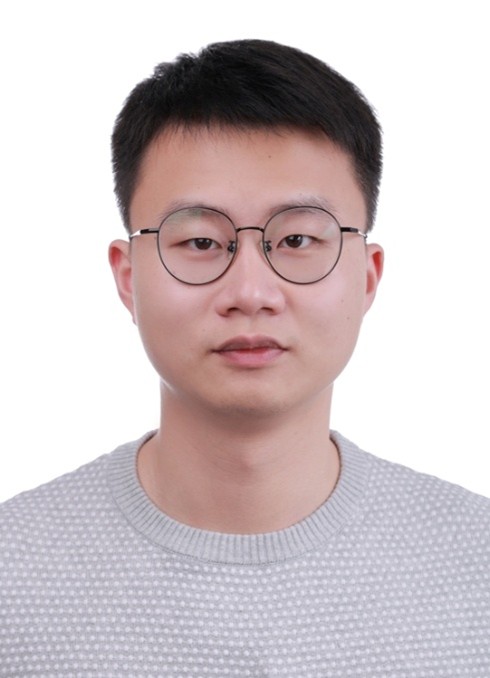
Dr Xinyuan Wu is a Postdoctoral Research Fellow at the School of Photovoltaic and Renewable Energy Engineering, UNSW Sydney. His research focuses on the reliability physics, degradation mechanisms, and accelerated testing of high-efficiency crystalline silicon solar cells and photovoltaic modules, with particular emphasis on industrial TOPCon and silicon heterojunction solar cells.
His work aims to bridge the gap between high-efficiency solar cell development and long-term module reliability. By combining cell-level accelerated ageing tests, advanced electrical characterisation, microstructural analysis, and device-to-module correlation, he investigates how environmental stressors, including damp heat, moisture, ionic contamination, acidity, and thermal stress, affect the performance and stability of next-generation photovoltaic devices.
Dr Wu has developed chemically relevant accelerated testing methods to evaluate damp-heat-induced degradation in TOPCon solar cells. His studies have revealed key degradation pathways associated with front metallisation, increased contact resistivity, passivation loss, and metal–semiconductor interface failure. In particular, his work has clarified the roles of Ag/Al paste instability, aluminium self-oxidation, and contaminant-induced contact degradation under damp-heat conditions. These findings provide important guidance for metallisation optimisation, laser-assisted contact formation, and reliability-oriented process design for industrial TOPCon technologies.
In addition to TOPCon reliability, Dr Wu has conducted systematic studies on silicon heterojunction solar cells, including contaminant-induced degradation, surface passivation failure, and cell-level protection strategies. His research integrates material-level understanding with device-level diagnostics to develop practical approaches for improving the long-term stability of advanced silicon photovoltaic technologies.
Dr Wu has extensive expertise in photovoltaic characterisation, reliability testing, equipment operation, and process development. His characterisation experience includes I–V, Suns-Voc, EQE, TLM, PL/EL imaging, damp-heat ageing, contamination testing, and module-level reliability assessment. He is also highly experienced in advanced microstructural characterisation, particularly focused ion beam, FIB, sample preparation and scanning electron microscopy, SEM, analysis, which he uses to investigate interface degradation, contact failure, and local structural evolution in photovoltaic devices. In addition, he has substantial experience in the operation, maintenance, and process optimisation of ALD, PEALD, and PECVD equipment, supported by rich industrial production-line R&D experience in thin-film deposition, passivation-layer engineering, and scalable photovoltaic process development.
Through close collaboration with leading photovoltaic manufacturers, his research is strongly connected to industrial challenges in solar cell manufacturing and module reliability. His work supports the development of more reliable, durable, and commercially viable high-efficiency photovoltaic products.

